
Do you have an idea for the development of nanofiber enhanced product? Join Elmarco Incubator Program!
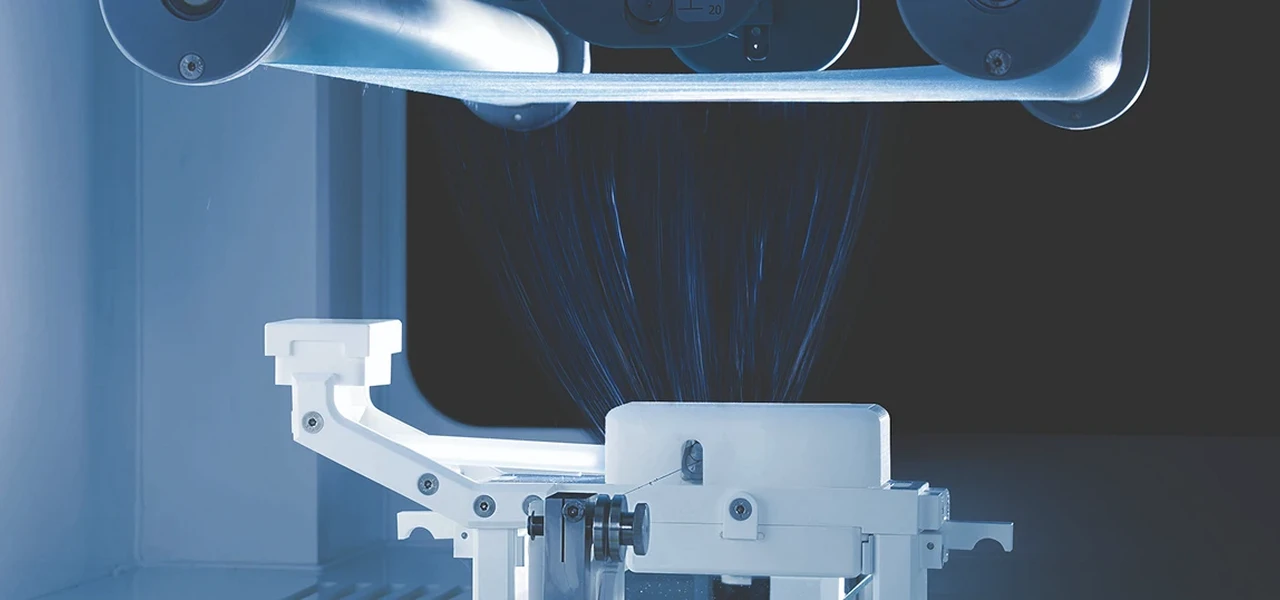
Turn your nanofiber idea into an industrially viable product
Develop, test and scale your product concept with Elmarco’s electrospinning expertise and equipment.
A promising laboratory result is only the beginning.
To become a viable product, your nanofiber material must be repeatable, measurable and scalable.
The Elmarco Incubator gives selected innovators access to the expertise, facilities and equipment needed to take that next step — without first investing in their own industrial electrospinning technology.

Next application round:
August 3–September 30, 2026
What is the Elmarco Incubator?
The Elmarco Incubator is a collaborative development program for selected organisations with promising nanofiber-enhanced product ideas.
You bring your application knowledge and product concept. We bring electrospinning expertise, R&D facilities and laboratory-to-industrial Nanospider™ equipment.
Together, we test whether your idea can become a reproducible and scalable material.
For a detailed introduction to the program, watch the Elmarco Talks video:

Who is it for?
The program is designed for universities, research teams, startups and companies that:
- have identified a potential nanofiber application or functional material
- need to validate performance or prepare samples for further development
- want to move from a laboratory concept towards a repeatable process
- need access to industrial electrospinning before investing in their own equipment
What do selected participants get?
Successful applicants gain access to the Elmarco R&D Centre in Liberec, Czech Republic, and support from experienced Elmarco specialists.
Depending on the project, this can include:
- laboratory and industrial electrospinning equipment
- a wet laboratory for preparing polymer solutions
- sample preparation, process development and optimisation
- material characterisation and performance testing
- scale-up from A4-sized samples to rolls up to 1.6 metres wide
There is no one-size-fits-all format.
A focused project may take one day, while a more complex development and scale-up project may continue for several months. The scope, schedule and required resources are defined individually according to the needs of each project.
Testing capabilities
Producing a nanofiber layer is only part of product development. You also need to understand how the material behaves and whether it delivers the required performance.
Available testing and characterisation methods include:
- scanning electron microscopy (SEM)
- air permeability and pressure drop measurement
- filtration efficiency testing
- hydrostatic head testing
- oleophobicity measurement
- tensile strength testing
- porometry
- basis weight measurement
- visual analysis
The relevant methods are selected according to the needs of each project.
Your know-how stays protected
Existing intellectual property remains with its owner.
Project information is handled confidentially, and any project-specific confidentiality and intellectual-property arrangements are agreed before work begins.
What does it cost?
We aim to minimise or, where possible, eliminate participation costs.
The cost-sharing model is defined individually, taking into account the participant’s resources and ability to contribute to the project.
Typical participation models include:
- Universities and academic teams – minimal or no participation costs
- Funded startups – shared project costs
- Established companies – paid participation
How to apply
1. Tell us about your idea
Complete the applicant screening questionnaire and explain the application, the problem you want to solve and the current stage of development.
Applicant screening questionnaire
2. We review your concept
Applications are assessed after each application round.
3. Selected applicants are contacted
If your concept is selected, we will contact you within one month after the relevant closing date.
4. We define the project together
We agree on the objectives, required equipment, testing methods, expected outputs, project scope and a realistic development schedule before work begins.
Upcoming application rounds
August 3–September 30, 2026
February 1–March 31, 2027
February 1–March 31, 2028
Applications are reviewed after each round. Selected applicants will be contacted within one month after the relevant closing date.
See the Incubator in practice
Hear directly from a participant and learn how the Elmarco Incubator helped move a technology towards larger samples and real-system testing.

Could your idea be next?
You bring the idea.
Together, we test its potential.